
Multi-currency expenses
Expenses in different currencies. Reports in yours.
Record employee expenses in their original currency and bring report totals together in your company currency. Reimgo keeps the original amount, the exchange rate and the converted value together, so employees and finance can see how each amount was calculated.
7-day free trial. No card needed. Cancel anytime.
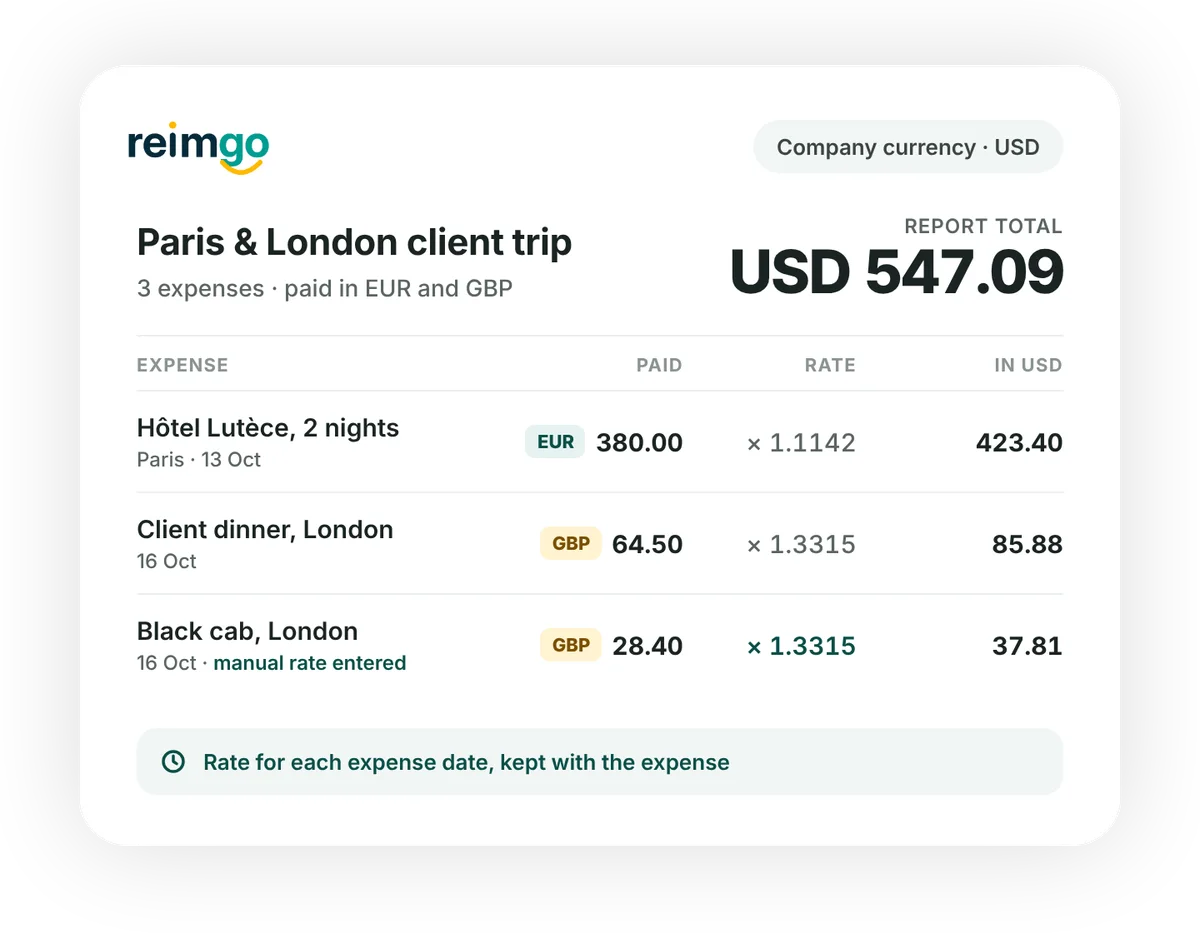
From a foreign-currency receipt to a clear report total
- Capture the amount and currencyReimgo reads the amount and currency from the receipt. Employees check the draft and correct any details before submitting.
- Convert at the rate for the expense dateReimgo looks up an exchange rate for the expense date and converts the amount into your company currency. The rate used stays recorded with the expense.
- Review both amounts togetherSee what was spent in the original currency beside its converted value. Report totals use your company currency, so expenses are easy to review together.
- Record a different rate when neededIf an employee was charged at a different rate, they enter it with a written reason. Manual rates are marked as such, and the change, the reason and the person are recorded.
Keep currency details clear for employees and finance
Preserve the original purchase amount
The amount and currency shown on the receipt stay beside the converted value, so approvers can compare the claim with its supporting document.
Choose the currencies your team uses
Admins control the company's currency list, giving employees the options they need for work purchases.
Report in each company's currency
Each legal entity has its own company currency. Entities that report in different currencies live in the same Reimgo account.
Export the conversion details
CSV and Excel exports carry the original amount, currency, rate and converted amount behind every total.
One trip, several currencies, one report
An employee travels to meet clients in France and the UK. The hotel receipts are in euros, while meals and transport in London are in pounds. They capture the receipts and check the draft expenses in Reimgo. Each expense keeps its original amount, and the report brings the converted totals together in the company's reporting currency.
The manager reviews the receipts and the conversion details, and finance prepares the reimbursement from the company-currency amounts.
Questions about multi-currency expenses
What are multi-currency expenses?
Work purchases made in a currency other than the company's reporting currency. Reimgo records the original amount and its converted value, so you can review claims and prepare reimbursement totals in your company currency.
Where do the exchange rates come from?
Reimgo looks up a published daily rate for the expense date and keeps the rate used with the expense. If no rate is available, the employee enters one with a written reason.
Can an employee change the exchange rate?
Yes, on their own expense and only with a written reason, for example when their card statement shows a different conversion. The rate is marked as manual and the change is recorded in the audit trail.
Can approvers see the original amount?
Yes. The original amount and currency are shown beside the converted amount, so approvers can compare the expense with the receipt and check the conversion.
Which currencies can employees use?
Any currency on the company's currency list, which admins manage.
Which currency is used for reimbursement?
The company currency of the employee's legal entity. The payroll export carries that amount, and your business makes the payment through its payroll or bank.
Can we include card foreign-transaction fees?
Not automatically. If your policy reimburses them, add the fee as a separate expense line. Card feeds are not part of the product.
Do exports include the exchange rate?
Yes. CSV and Excel exports include the original amount, currency, exchange rate and converted amount.
Bring your next overseas expense into one clear report
Start your free trial, capture a receipt in another currency and review the original and converted amounts together.